Winter Heat in Bali

flower in Bali with bee 

 Winter always seems to be a run-around-like-a-chicken-with-your-head-cut-off sort of season- Christmas shopping, vacations, New Years plans, work parties, house parties and numerous deadlines. We all find our ways to survive the cold and for me, cooking is one of the best paths to warmth.

 flower in Bali

Another great way to get warm is to go on vacation! To Bali! On the beach! Bali warmed (burnt) me for five whole days of perfect perfection. It was a trip of several firsts that I won’t soon forget.

 spotlight flower

I like to think I’m a fairly experienced traveler who strives to experience new things and meet new people. I’ve Couchsurfed in stranger’s homes and made lasting friendships with people all around the planet and I always try the traditional dishes and cuisine, strange or not, but this was my first time traveling by myself. Yup. Nearly thirty countries, three continents and this was my first time going it alone. I’ve used friends/lovers as comfort crutches when traveling in the past but this time I didn’t feel uncomfortable when I realized that no one could go with me. I surprised myself when I found the ability to navigate a map, keep my head when I got lost and start up conversations with others. For some people, these skills come easily. For me, they had to be learned and experienced.

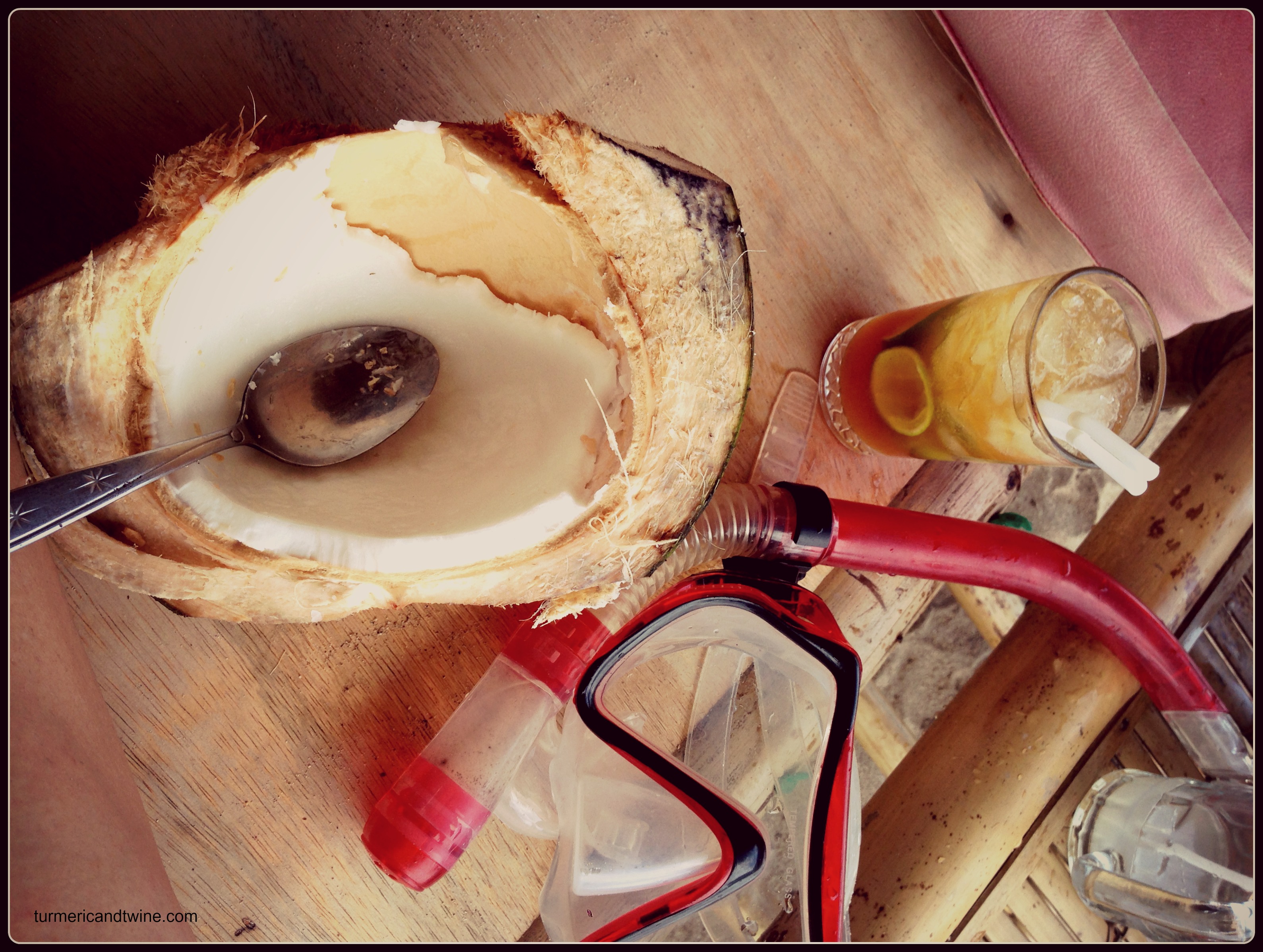
 coconut, snorkel and rum

I snorkeled with sea turtles just off the Gili Islands. I’ll never forget this. I surfaced to clear the fog from my snorkels and a man a few meters was yelling at me. He had a thick accent so I didn’t understand what he said, but then he asked if I wanted to see it. I figured if a stranger is yelling at me to come look at something in the ocean, I should go. I approached the scene and screamed underwater when I saw a MASSIVE turtle swimming around and munching on grass. I was close enough to touch it at one point, but didn’t. I was so content being close to it. The experience brought me to tears.

This one's for dad.
This one’s for dad.

Gili sunset 

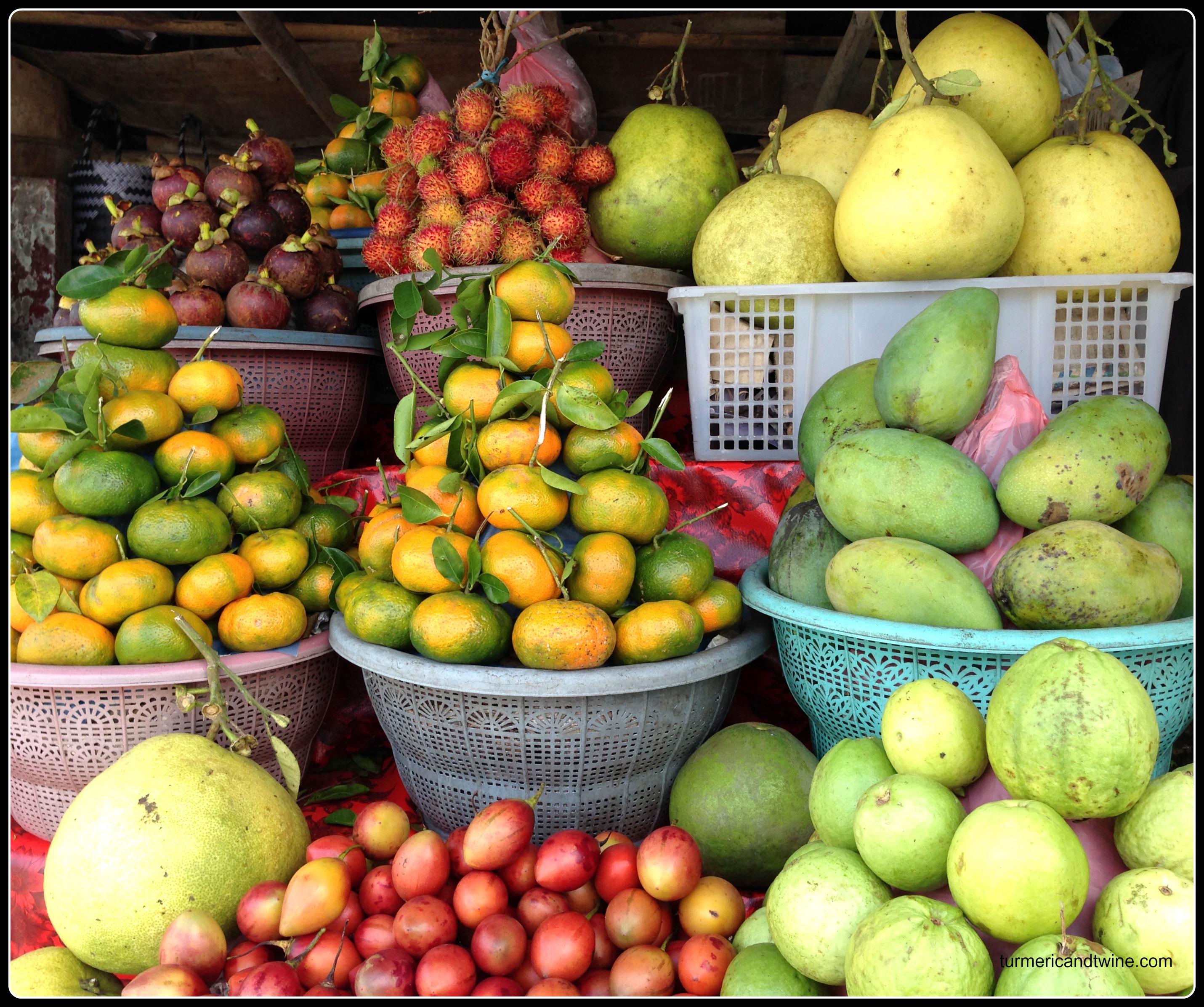
I dined constantly on fresh tropical fruit. This was not a first, but a noteworthy part of my trip. Pineapple,  coconut, papaya, snakeskin fruit, passion fruit, some weird little red thing, mango, you name it, I ate it (except bananas). I couldn’t stop. It seemed like a fabulous idea at the time, but it returned to kick me in the ass at the end. Let’s just say, I’m really glad I had an aisle seat on my flight home, as my regular trips to the bathroom would have been a lot to ask of someone else to roll out of their comfy airplane seat.

gorgeous tropical fruitfruit stand in Bali 

Needless to say, my next few postings will be highly influenced by Bali, Balinese cuisine and/or culture and will most likely include a few photos of my experience there. I wish I had something more poetic to say at this point, but for now, I’d rather just let the photos do the talking. Do enjoy. Let me know what you think.

volcano in Balimonkey statue in UbudSacred monkey forest wall Ubudflower offerings in Bali

Turmeric and… basket.

turmeric and basket

Quince Tarte Tatin + In and Out of the City

 Howdy!

 praying mantis on pot

As a Seoul dweller, I experience virtually no wildlife and rarely get to see animals other than street cats and tiny white dogs. So, when I met this little fella on a recent trip to the countryside in Chungju for an amazing day of learning about and eating fermented foods, I had to snap a photo. Praying mantises have always seemed like tiny (frightening) sages to me. The way they turn their wee heads all the way like they do makes me feel like my soul is being read, judged and thusly, condemned. Alarming. Maybe I need to reel in my imagination a bit.

 kimchi pots

The day trip, hosted by Kinfolk, was the dream baby of my fabulous friend Jacqui. A group of about 20 were swept away to a beautiful meditation retreat center that is also dedicated to traditional Korean fermentation recipes and techniques. We tasted soy sauce, garlic, vinegars, eggplant wine, various leafy plants and kimchi all brewing in large pots in the sun. Participants were able to help prepare some dishes, such as stuffed rice balls and tofu skin wraps for the feast at the end of the day. After sampling all the fermented goods, it was pretty astonishing that were able to consume more. But, oh, we were able and, oh, we did.

 vinegars

It was a glorious day and even thinking about it helps remind me that I need to get out more often. Living in the city is… challenging. Since starting my newest job four months ago, my commute has gone from a five-minute walk to forty-five minutes of walking, riding the subway and walking again. It is no surprise, yet still shocking how much a longer commute saps ones energy. Further, my commute is on one of the most packed lines on the Seoul Metro. One day last week, it was so mind-numbingly packed and people were being tossed around so hard that some ladies were wincing and yelping as they were trying to get off (imagine a disturbing mix of sex noises and dog cries). I practically ran off the subway car at my stop, very dramatically, tears in my eyes, feeling depleted, defeated and stressed. I wondered if I would be able to survive this commute to the end of my contract.


Luckily, most days are, at least, bearable. I force myself into a numbed state most every time I get on, determined not to let the daily violations of my personal space get the best of me. I’ve seen people who have. It ain’t pretty.

 quince tarte ingredientsquince sentinels

Quince is a curious fruit I’ve never really had the time for. When there are other trusty fall fruits like pomegranate, tangerines and persimmon about, who has time to be excited about an unassuming green rock of a fruit such as quince? I have since mended the error of my ways and become mildly fascinated with the most awkward member of the Rosaceae family.

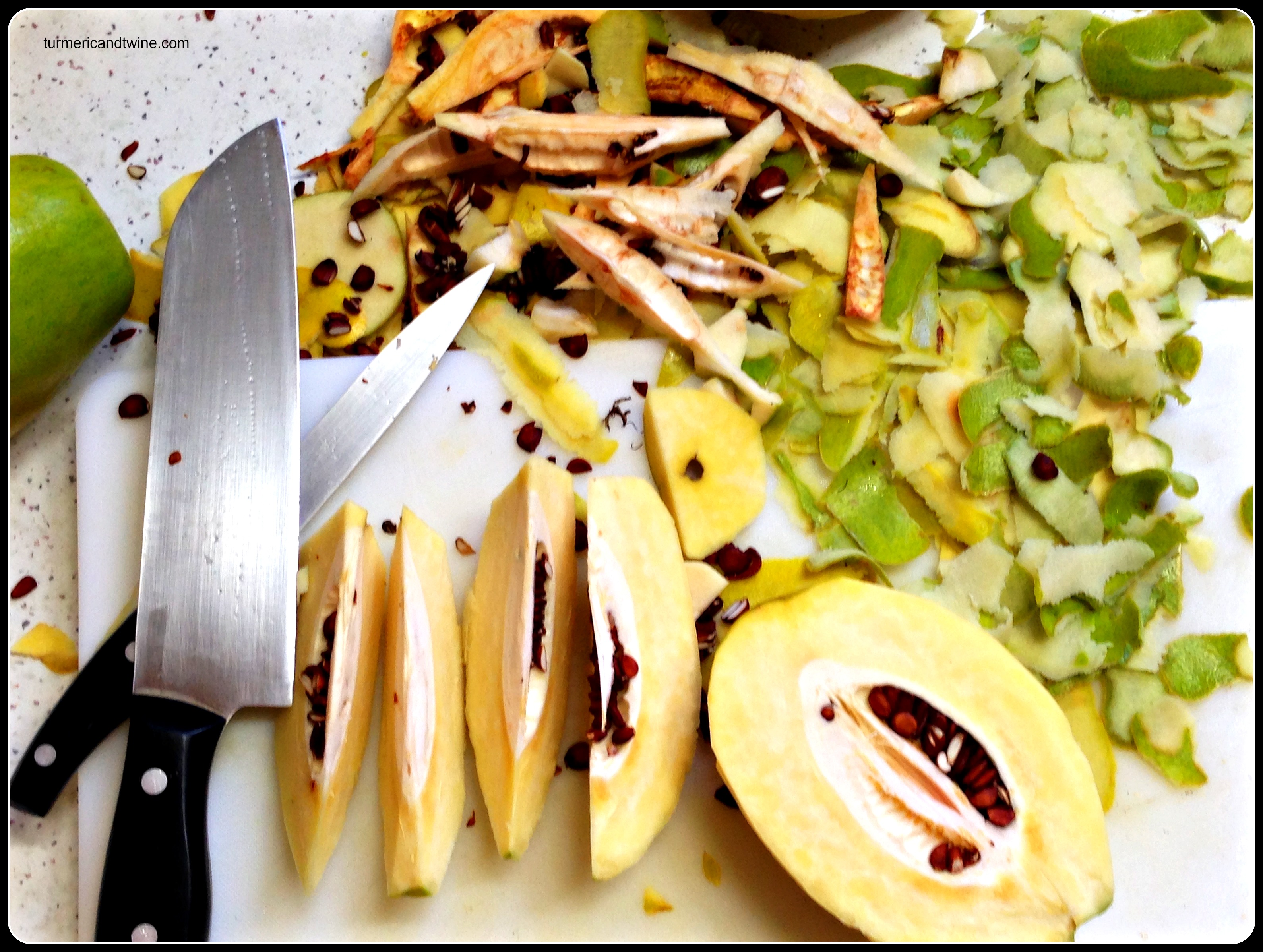
 quince prep

Before I learned that quince isn’t exactly edible/digestible when it is uncooked, I, of course, ate lots of it raw. I even brought it as a snack to work, gaining the attention of the older and hungry elementary students. After some initial trepidation and reactions to the astringency, they were begging for more. I was too, after they devoured the lot. Buggers.

 poached quince

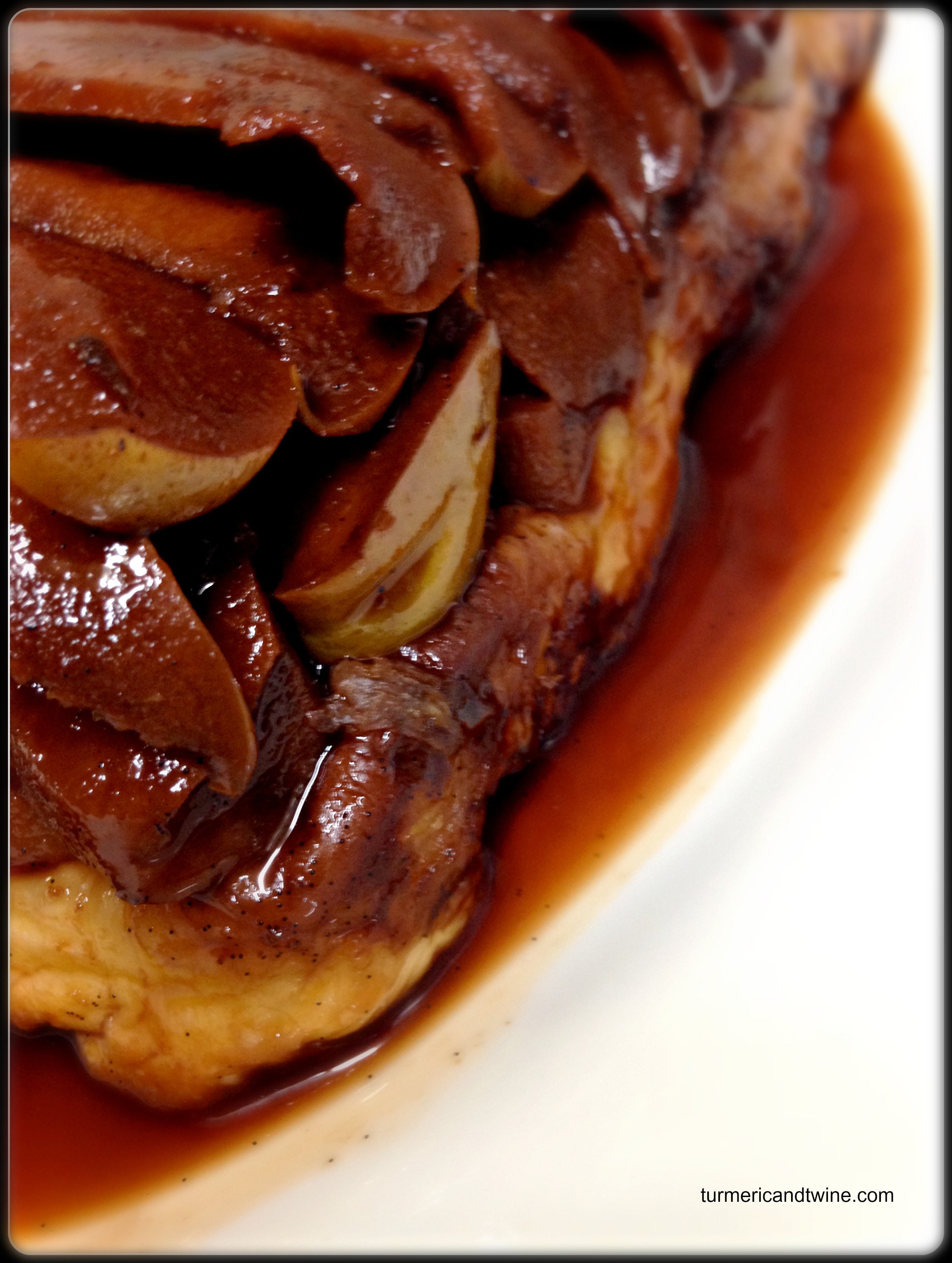
I’ve never particularly noticed quince on sale here in Seoul, but I now live close to several traditional markets that provide produce that is seasonally sensitive, so they’ve made appearances everywhere. I bought a few and tried Food52’s version of quince tarte tatin. I usually dislike pies with quince’s sweeter cousins apple and pear, (I know, I know… I’m just really picky), but quince really hit the spot. The fruit not only kept its deliriously tart goodness, but it sweetened just enough to be transformed into a unique dessert. Another interesting feature is that the white flesh of quince also turns red once cooked. It has tempted me to experiment with it more.

quince tarte tatin 1

Quince Tarte Tatin


Ingredients

For Poached Quince

  • 4-5 quince, peeled and deseeded
  • 6 cups of water
  • 1 lemon, cut in a half and juiced
  • 2 cups of brown sugar
  • 3 vanilla beans
  • a pinch of sea salt

For Quince Tarte Tatin

  • 1 pound puff pastry
  • 3-4 poached quince (depending on the size of your baking pan)
  • 1 ¼ cup quince poaching liquid

Directions

In a large pot, add the sugar and water and bring to a low boil. Once the sugar dissolves, add the lemon, lemon juice and vanilla beans.

Peel and deseed the quince then cut into quarters (or sixths, depending on the size of your fruit. Gently drop the quince into the liquid and cook until tender, which can take about 45 minutes to an hour. Remove from heat and scoop the quince pieces from the liquid with a slotted spoon.

poaching quince

Preheat oven to 375ºF/190ºC/Gas mark 5.

Pour about 2 ½ cups of the poaching liquid into a non-reactive skillet -most Teflon or heavy bottomed stainless steel brands will do. On medium high heat, reduce the liquid until it develops a syrupy viscosity. Be careful not to burn it, or you will have a terrible mess to deal with.

Arrange the quince pieces in a baking pan, cutting them further if needed. You may need to place several layers of the fruit so they fill the pan adequately. Drizzle the reduced liquid on top of the quince.

On a lightly floured surface, roll out the puff pastry to a third inch thickness and lay the sheet on top of the awaiting quince. Cut away excess pastry.

Bake the tart for about 35-40 minutes or until the pastry is golden brown and fully cooked. Let it cool for at least 10-15 minutes. When ready to serve, place a plate that completely covers the pan over top of the tarte. In a quick, fluid motion, carefully flip the tarte onto the plate so it is completely removed from the pan.

quince tarte tatin

Serve warm, with vanilla ice cream if desired.

Serves 6-8.

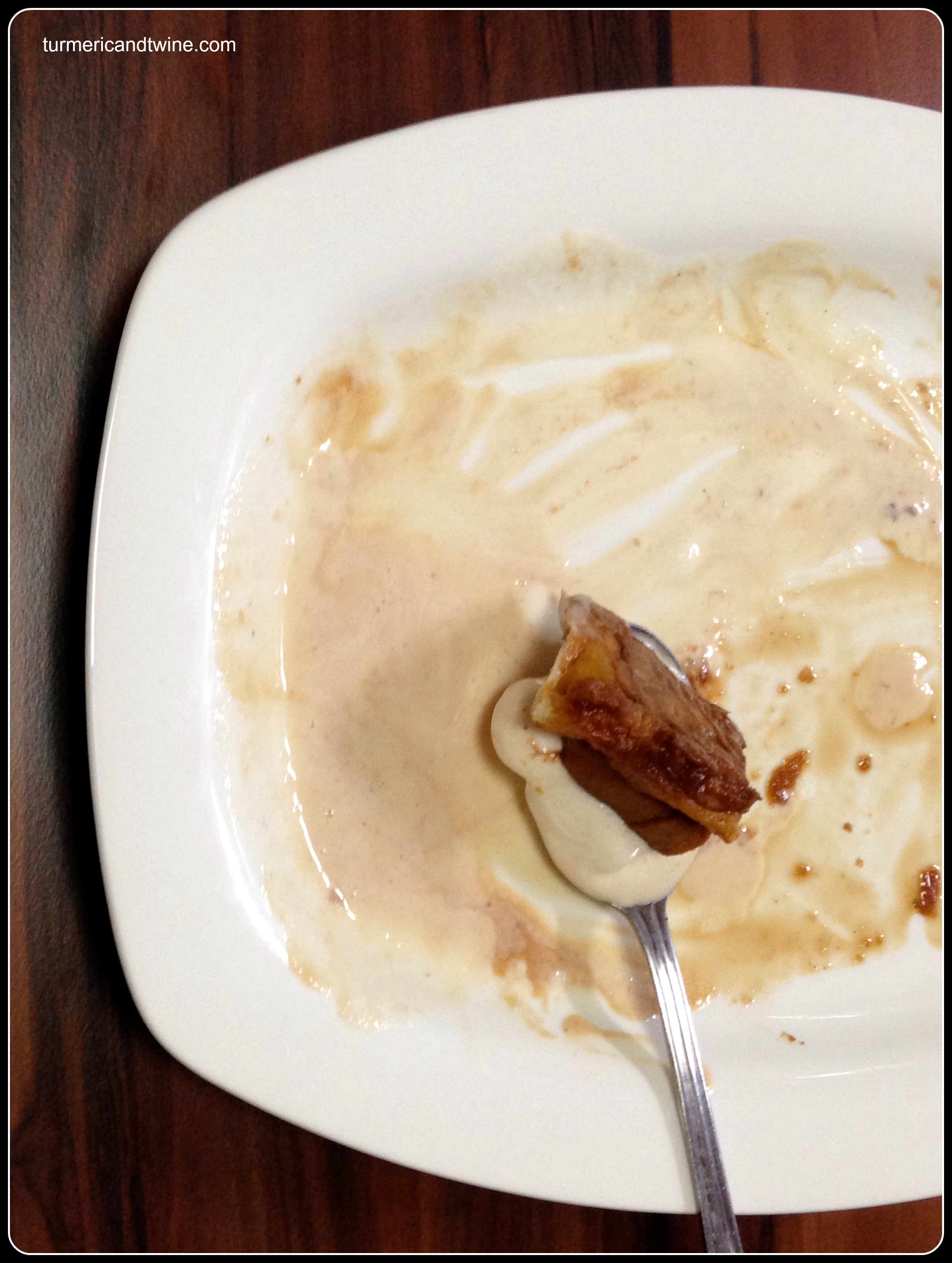
quince tarte tatin bite

Coconut Lemongrass Carrot Chutney + The Orange Afterglow

Coconut Lemongrass Carrot Chutney 2

I love food. I love to think about it, I love to make it. I love to eat it. I love the way it feels, smells and tastes. I will eat just about anything. Really… maybe.


In a recent conversation with one of my elementary classes, my students and I got on the subject of bizarre foods. We disclosed our weirdest bites to each other, almost as if they were secrets. Being in Korea, home of many super fermented foods such as kimchi and cheonggukjang (stinky fermented soybeans), as well as stews that include dog meat (good for man) and snacks that include silk worm larva, many of my students had a rather different idea of what foods should be considered bizarre than I did. When I told them I’d eaten live octopus (this one got the most squeals when I told people back home), they were all like “Oh yeah…. Sure. No biggie, teacher”, but when I told them about the scorpion lollipop I got from a classic American joke/candy shop, they gasped and screamed. Nonetheless, we giggled, squirmed and gasped as the lists flew out.

 Coconut Carrot Lemongrass Chutney ingredients


Many years ago, I feared food. I used to squirm at the thought of consuming anything I considered un-pure or unhealthy. For over a year, I put severe restrictions on my diet and basically only ate uncooked vegetables, fruits, nuts and seeds, which is a rather expensive and time-consuming lifestyle. I had to put several hours each day into planning, acquiring and preparing my meals.


Carrots are one of the cheapest, easiest vegetables to acquire and I happen to be a big fan of those friendly, orange roots. I kind of lived off of them for a while, not really considering the consequences that might lurk in The Dark Side of Raw Foods. Due to the massive overdose of beta-carotene my body was receiving and the lack of starches to soak up the excess, my skin turned an extremely disturbing orange colour. I’m pretty sure I burned all the photos taken of me during my hairy hippie phase, so I have no orange hue to show you. Unfortunate… it was impressive.

 Coconut carrot lemongrass chutney ingredients 2


I might also add, that I had The Worst Gas Possible when I was eating raw foods. Even though it was over a decade ago, I still feel bad for the girl I drove cross-country with. I’m sure she felt like she was riding with a camel. Looking back on that time, I squirm so much more about orange skin and bad gas than tossing back a bit of snake soup, frog sashimi or random bug. I still love carrots, though. We have been through too much to let go of our relationship because of a skin tone set back. It was a little rude of them, but I let it go. 


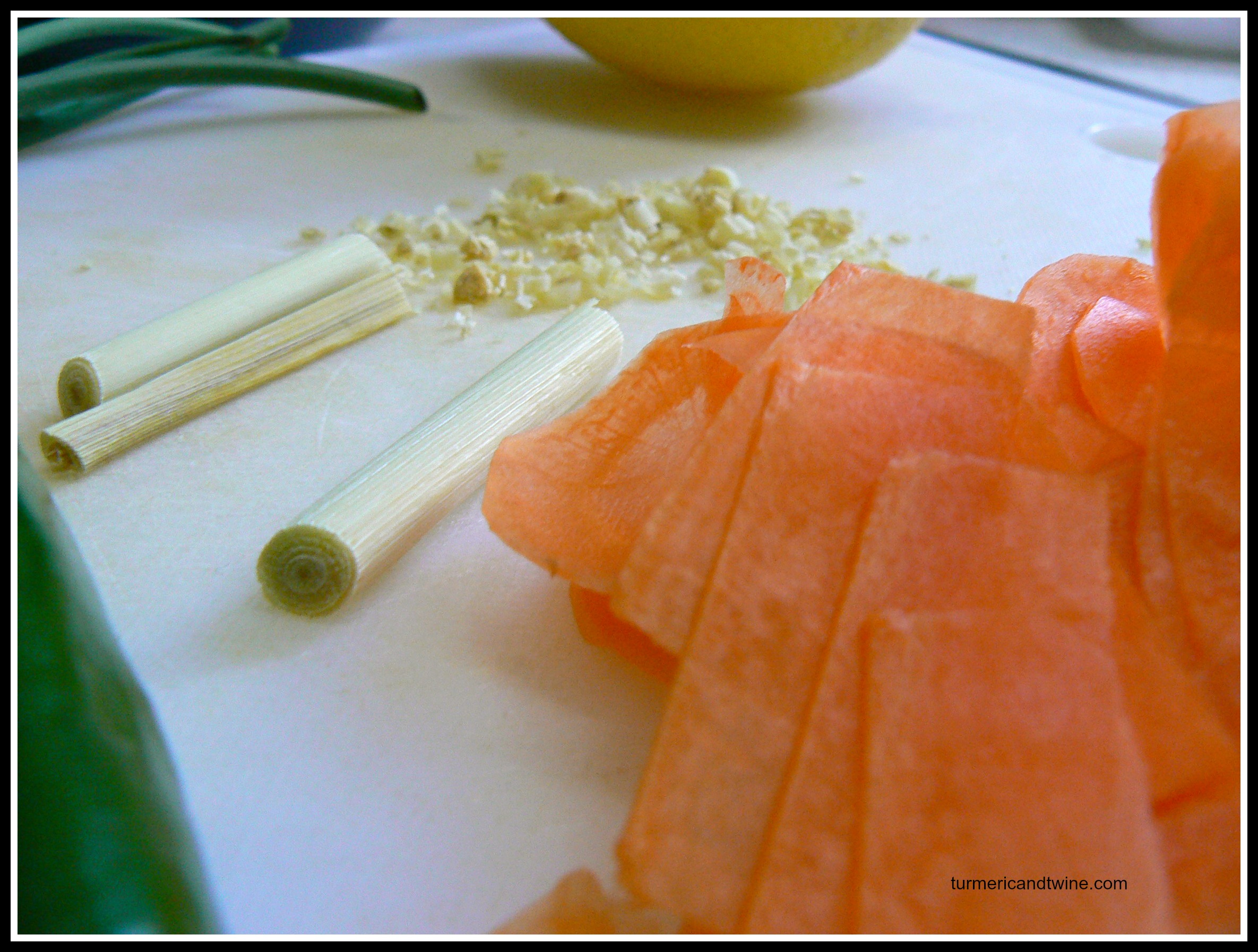
Coconut Carrot Lemongrass Chutney line up

The Chutney family is a rowdy group of condiments that hails from South India. They usually contain some mixture of spice(s), vegetable(s), and/or fruit(s) and there are many varieties. Chutneys may be either wet or dry, can have a coarse to a fine texture and can contain either fresh or pickled preparations. This little chutney is rockin’. The sweetness of the carrots, creamy smoothness of the coconut and tang of the lemon would make any mouth happy. Eat with some Dijon on toast, on the side of some grilled chicken or just spoon in your mouth.


Coconut Carrot Lemongrass Chutney 1

Coconut Lemongrass Carrot Chutney


Ingredients

  • 4 cups grated carrot (about 3 carrots)
  • ½ cup grated coconut
  • 8-10 garlic gloves or scapes, chopped
  • 1 chili, finely chopped
  • 1 lemon, juiced
  • 1 tbsp finely chopped lemongrass
  • ¼ cup olive oil
  • salt and pepper to taste

Directions

In a fry pan, heat cooking oil and lightly brown the garlic, lemongrass and chilies.

Mix all ingredients in a bowl.

Garnish with sesame seeds.

Consume immediately.

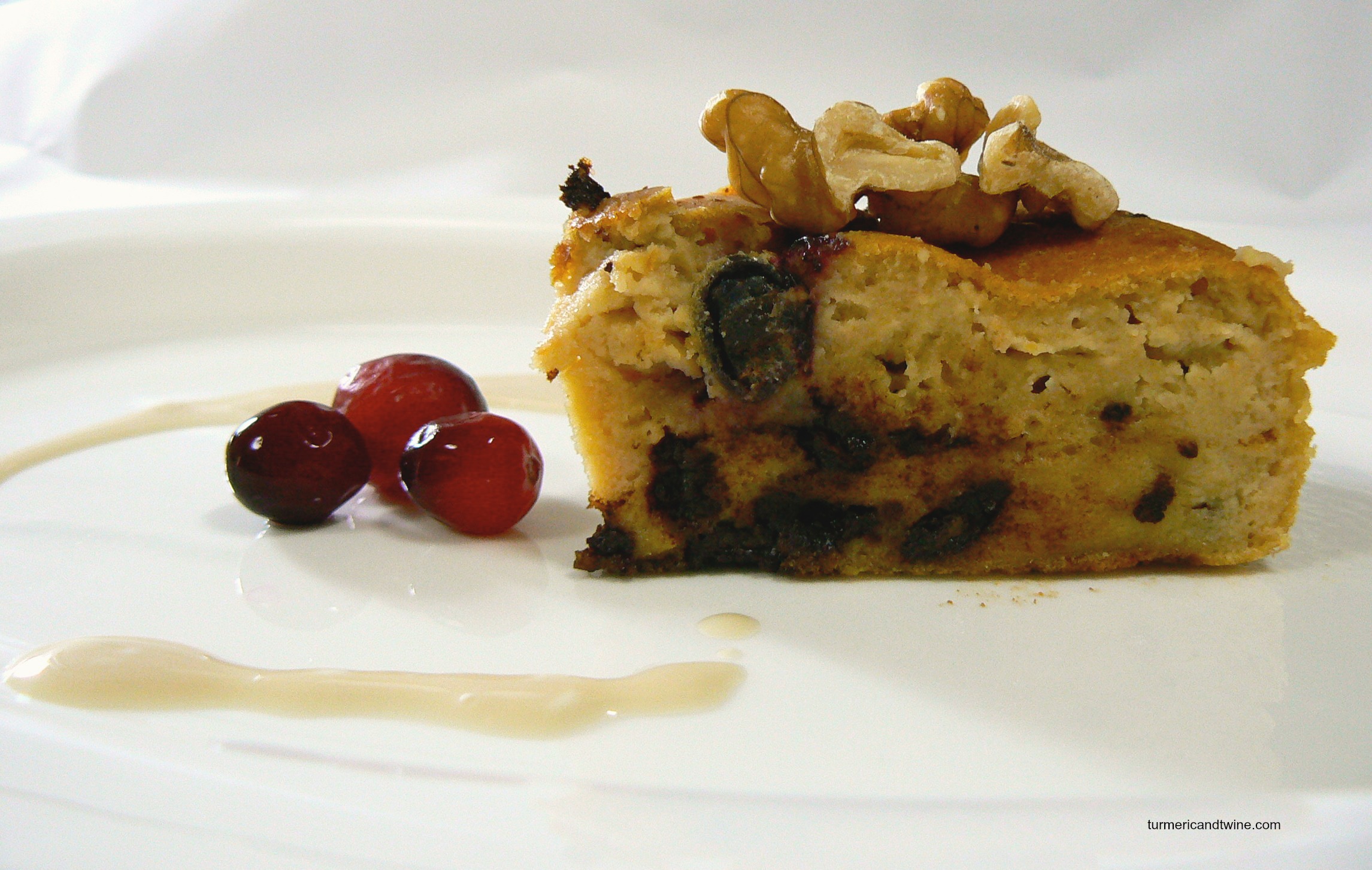
Lemon Ricotta Deep Dish Pancake with Cranberries and Chocolate For Your Sunday Brunch

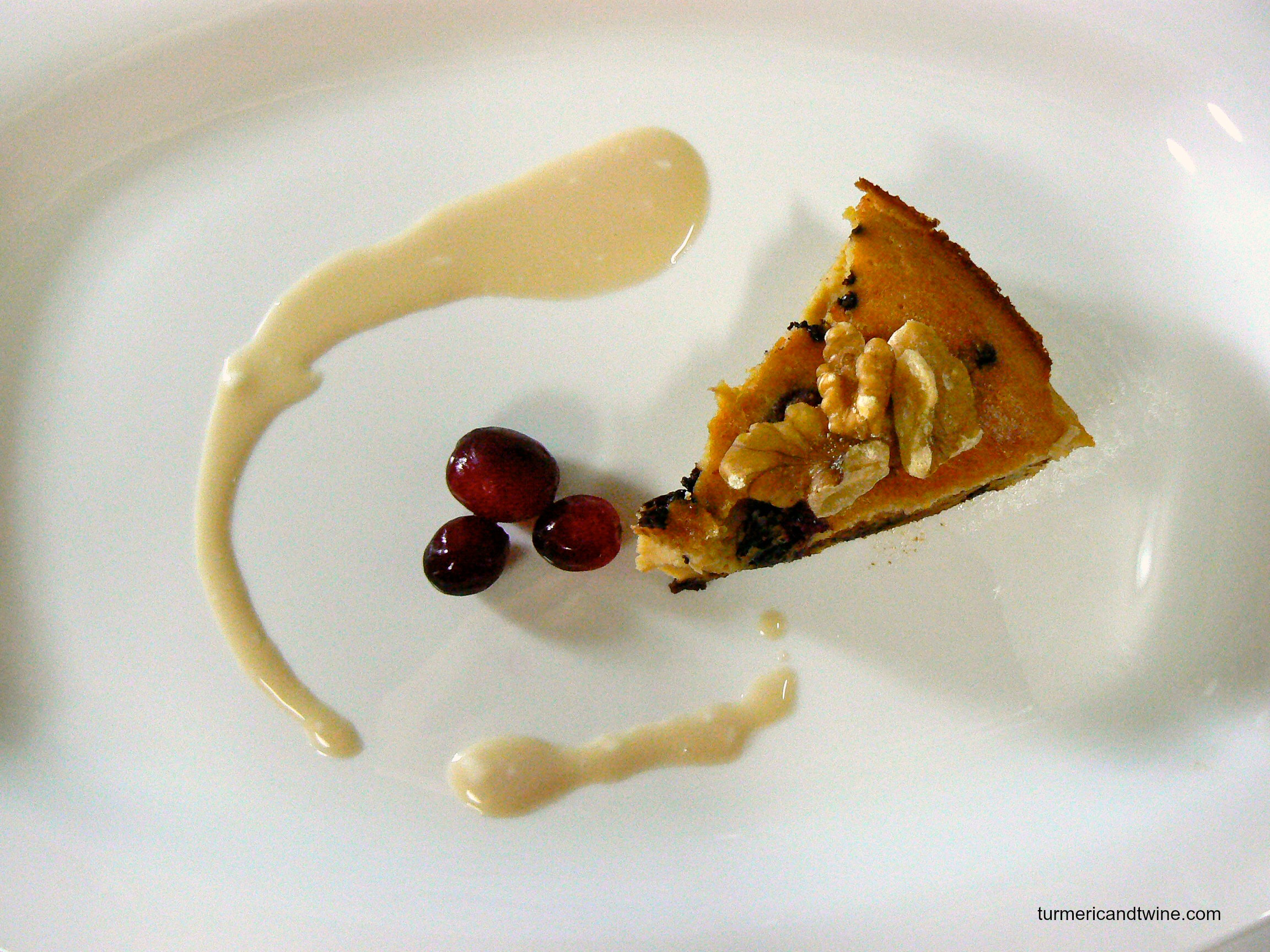
Lemon Ricotta Deep Dish Pancake with Cranberries and Chocolate slice

Now beginning the recovery from my recent job/life debacle, I am finally starting to step away from a constant state of panic. I am happily settling into a new routine with my new job and generally feeling normal again. Fresh start. My new apartment is the biggest I’ve ever had in Korea and I love it. I’m looking forward to getting my kitchen set up and getting back to cooking.

 Korean kitchen

For now, I’m enjoying making comforting, cozy foods. There is nothing better to get you back on track with your life than cooking the recipes you know and love.

 Lemon Ricotta Deep Dish Pancake with Cranberries and Chocolate

Brunch is my favourite meal. It combines sweet, savory, bitter and greasy with flawless ease. It’s perfect for sleeping in or meeting a friend when recovering from the night before.  Since you’re combining two meals, you can allow yourself to overeat (in some moderation) without guilt, or at least that’s what I tell myself.

 Lemon Ricotta Deep Dish Pancake with Cranberries and Chocolate 2

I’m not usually attracted sweet foods in the morning, but since brunch is a gateway meal, I can make exceptions. This deep dish pancake is a perfect way to tie your sweet brunch to your savory brunch. It’s eggy texture and sour fruitiness invites the eater to have one bite with syrup, the next with a bit of bacon and the next mixed with quiche provençale. Or solo, of course. Wash it down with a sip of espresso macchiato. Viola! Brunch.

Lemon Ricotta Deep Dish Pancake with Cranberries and Chocolate 1

This recipe is very easy and the ingredients are easily found (even in Korea… Bless you, Costco). Invite a friend or two over for brunch, lounge around chatting and then work it off with a nice walk around town. Happy Sunday.

Lemon Ricotta Deep Dish Pancake with Cranberries and Chocolate slice 2

Lemon Ricotta Deep Dish Pancake with Cranberries and Chocolate

Ingredients

  • 1 cup all purpose flour
  • 5 eggs
  • ½ cup milk
  • 1 ½ cup ricotta cheese
  • 2 tbsp softened butter
  • ½ cup lemon juice (2 lemons)
  • 3 tbsp sugar
  • ½ tsp salt
  • 1 tsp baking powder
  • 2 tsp baking powder
  • 2 tsp vanilla extract
  • ½ cup fresh or frozen cranberries
  • ½ cup chocolate chips

Directions

Preheat oven to 425ºF/220ºC/Gas Mark 7.

Spread butter around a 7 inch circular baking pan.

In a bowl, whisk eggs until frothy.

Leaving out the chocolate and cranberries, whisk in remaining ingredients in with the eggs until smooth.

Pour the mixture into the greased pan.

Sprinkle berries and chocolate on top of the pancake and gently press in.

Bake for 20-25 minutes.

Cut a piece for yourself and drizzle with maple syrup mixed with a touch of ricotta cheese.

Garnish with walnuts and cranberries.

Eat immediately and voraciously.

Protect Yourself From Corrupt Hagwons in Korea. You Have Options.

This is (almost) my first non-food related post on this website. Usually I would hesitate to write such a post on a site so clearly dedicated to food, but I feel this will explain my two-month absence away from posting recipes. Also, I hope to help others in similar situations, which seems to be happening to more and more teachers in hagwons. If it weren’t for a few key friends who helped point me in the right direction, I wouldn’t have known how to protect myself. The whole endeavour would have ended quite differently. Likely with more question marks. And more tears.

Teaching in Korean private academies (hagwons) can be extremely beneficial in many ways. For four years, my experience teaching at hagwons has been far from perfect, but I’d always considered myself to be in relatively good situations. That is until two months ago when the shit hit the fan.

I found myself being treated very unfairly by my employers and trapped in a scam. After sacking me and another foreign teacher for unjust reasons, my employers informed me that if I wanted my release letter (necessary for visa transfer), I would not only have to repay the airfare they provided to get my out to Korea, but I would have to pay a 500,000 won recruiter’s fee. The latter was not stated on my contract and it became clear to me that my employers were going to hold my release letter hostage for money.

When in Korea on a teacher’s visa, one cannot just switch jobs. This is because our jobs are tied in to our employers. Employers can choose to release their teachers, or not.  Immigration laws for foreign teachers tend to be strictly enforced, while laws regulating hagwon abuse seem to be few and far between. It is a very unfortunate, problematic issue and it is not uncommon for hagwon owners take grave advantage of this.

After battling back and forth between thoughts of waiting to see what happens, fleeing the country and fighting tooth and nail for my rights, I decided I needed to protect myself. I did. And it F-ing worked.

Here are the steps I took:

I wrote out my grievance and thoroughly prepared all my evidence and documents including pay slips, conflicting statements and scrutinized my contract with the school. I also started secretly recording conversations with the owners on my phone.

Next, I found out my rights and read about commonly used deceptive practices by hagwon and hagwon owners on this very helpful site created by foreign lawyers who know Korean laws. EFLlaw.com

I read discussion boards on eslcafe.com and various other places to see what steps other teachers have taken to protect themselves when in similar situations.

I called the Korean immigration hotline and told them my grievance. They set up an appointment. I was hoping they would be able to switch my visa from an E-2 to a D-10. D-10 is a “looking for work” status and is a relatively new option for foreigners. It provides more time to those in urgent situations to take more time to look for work. They weren’t especially helpful as they informed me I needed a claim slip from the labour board before they could do anything.

So, I called one of the Labour officers at the Seoul Global Center and the Support Center for Foreign Workers to get their professional opinion of my case. After they, and everyone else I spoke to about it said my case sounded quite serious and that I wasn’t being treated fairly, I decided the best way to protect myself would be to make a claim with the Labour Board against my employers. Unfortunately, there doesn’t seem to be a way to do this in English. I had a Korean friend help me translate my grievance and fill out the claim form.

This was incredibly nerve wracking for me. I had never had to take actions such as these in my life and I was unsure of what the outcome would be or how long it would take to process. So, I read more discussion boards where people shared their stories of woe and triumph after making a claim against a employer with the labour board. I was relieved to find out that it seems the labour board has gotten so sick of hagwons breaking contracts and using so many deceptive practices to cut costs that they have really begun cracking down on them.

When a claim is made by a teacher, the labour board takes the hagwon to court. This looks really bad for the hagwon. Since they are concerned about the reputation of their establishment, they will often begin making offers to the teacher to get them to cancel the claim. The labour board knows this and informs the hagwon they have a few days to settle the dispute before they begin the investigation. Since I didn’t have the time, nor did I want to go through a painful legal battle, I was banking on my hagwon making offers to me as soon as they heard from the labour board. They did. I got my release letter and pretty much everything I wanted that day and it only took a few days.

Teachers, do not despair. You have options and there are ways to protect yourself. Don’t run away or give up without fighting. Before accepting any position, be sure to check your next potential employers on all the Hagwon Blacklists and be smart about scrutinizing your contract well. Good luck.

Here are photos to help remind you that you love Korea.

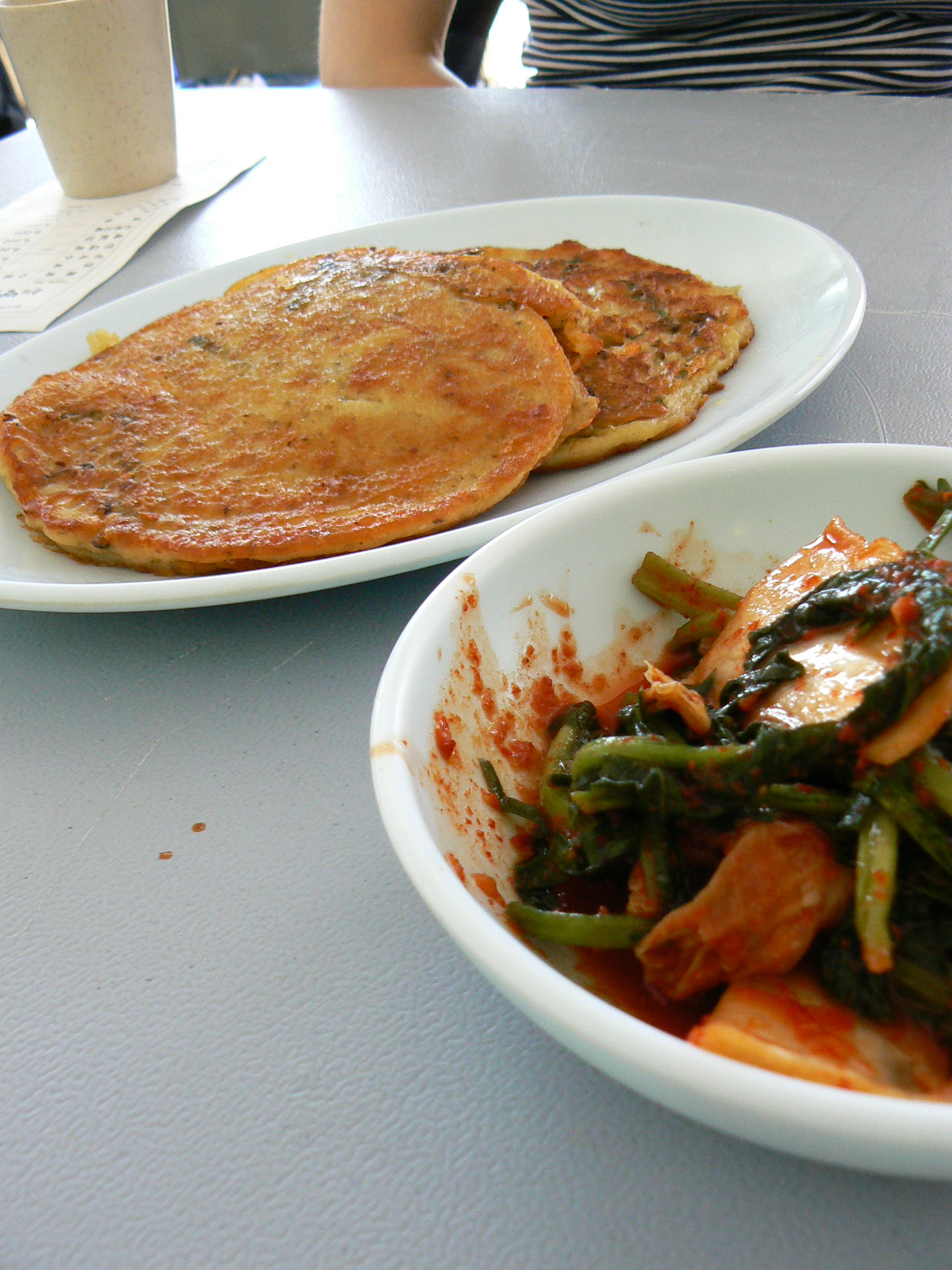
P1230126Seoul FortressKorean children doing stretchesPajeon and kimchi

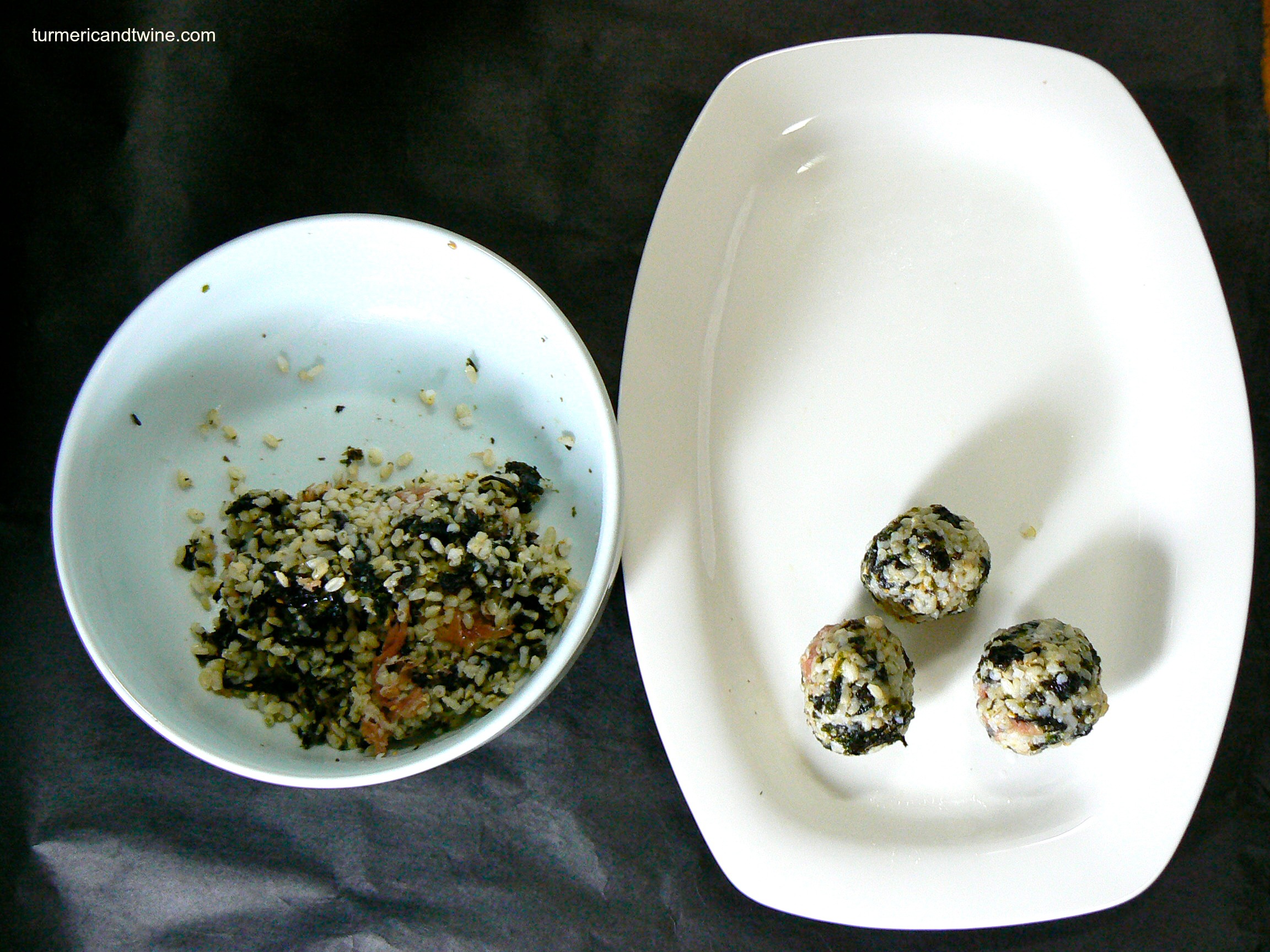
Korean Fist-Rice with Fried Seaweed, Prosciutto and White Truffle Oil

Korean Fist Rice with Fried Seaweed Prosciutto and White Truffle Oil 2

Of all the comfort foods I have grown to love here in Korea, Joomeok Bap, or Fist-Rice has become one of my favourites. This snack is healthy, tasty, easy and satisfying to make. It is perfect to bring on a picnic or as a pick-me-up when outdoors.

Korean Fist Rice with Fried Seaweed Prosciutto and White Truffle Oil

Fist-Rice is traditionally made by hand-mixing various vegetables, as well as ground beef or dried anchovies with rice. The mixture is then tightly packed into individual, fist shaped balls.  The best of the bunch uses crumbled seaweed (kim ga-ru). This is because Korean seaweed is deep-fried, salted and flavoured with sesame seeds, perilla oil and a pinch of sugar. The stuff is salty, greasy and delicious, so it’s easy to devour an entire bag in one go.

Korean Fist Rice with Fried Seaweed Prosciutto and White Truffle Oil 1

The combination of flavours in this dish are so glorious, it brings tears to my eyes. Land and sea take hand and make beautiful fist shaped babies.

Korean Fist Rice with Fried Seaweed Prosciutto and White Truffle Oil 3

Korean Fist-Rice with Fried Seaweed, Prosciutto and White Truffle Oil

Ingredients

  • 2 cups of uncooked sticky or glutinous rice
  • 4 cups water
  • 70 grams (about 1 ½ cups) Korean crumbled seaweed
  • 100 grams thinly sliced prosciutto torn into small pieces
  • White truffle oil

Directions

Rinse rice two or three times and drain. Pour the measured water on the rice in a pot and cover. Bring to a rolling boil on high heat for 10 to 15 minutes.

Lower heat to the minimum temperature and allow the rice to cook for another 30 minutes. Never stir the rice. To check if it has absorbed all the water, simply tip the pot on it’s side. If the rice slides, it needs to continue cooking. If it doesn’t slide, it is ready to be removed from heat.

Allow the rice to cool enough that it doesn’t burn to touch with your hand.

Combine the seaweed and prosciutto with the rice. Grab small handfuls of the mixture and squeeze to form tightly packed spheres.

Drizzle white truffle oil over the fist rice and devour.

No Korean products available near you? Order here. Or here.

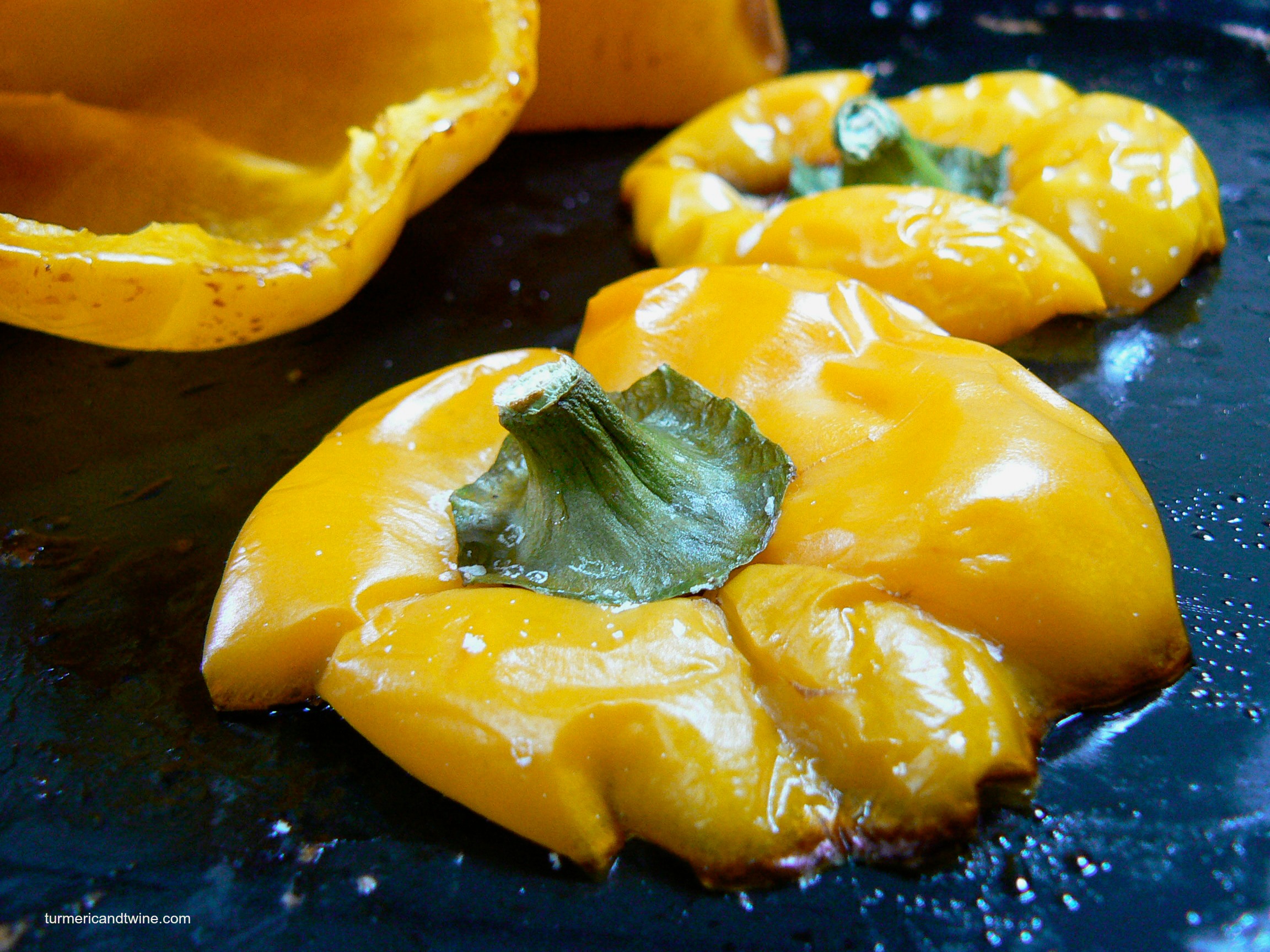
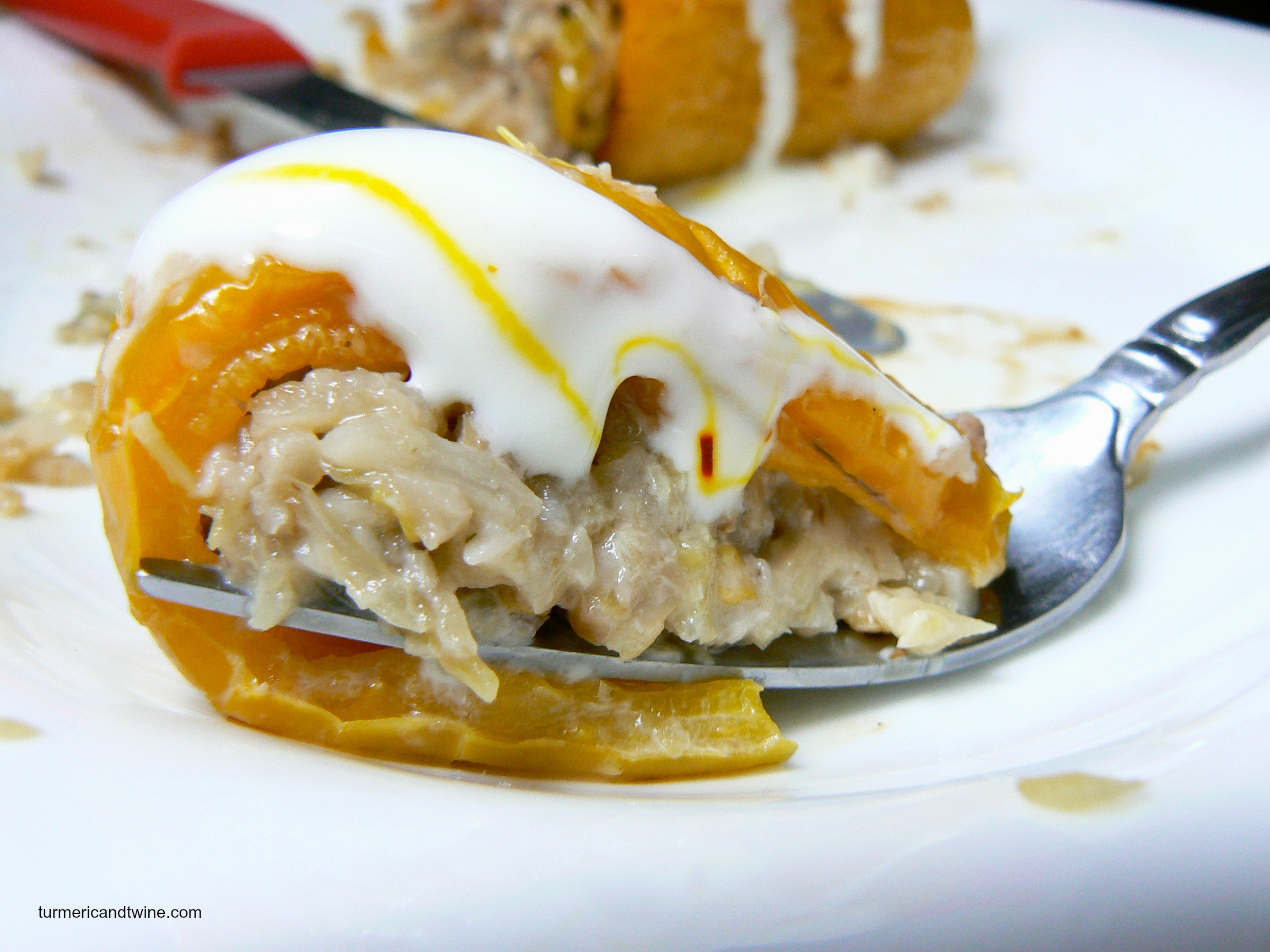
Stuffed Bell Peppers with Saffron Yogurt Sauce

Stuffed Yellow Peppers with Saffron Yogurt Sauce

I remember starting an odd little short story inspired by saffron when I was about twelve. My parents were avid listeners of NPR when I was growing up and I fancied Garrison Keillor’s fabulous stories from A Prairie Home Companion. I’d learned about saffron being The World’s Most Expensive Spice and started imagining tiny garden plots that could yield big money. I’d even considered using my backyard to start my own crop, blissfully unaware that the New England climate might not be suitable for saffron production. The story, if I remember correctly, was about an unassuming saffron farmer trying to survive in a small town riddled with landmines. I didn’t complete the story. The loose ends were too difficult to tie up.

 Roasted yellow peppers

The delicate filaments of the saffron crocus are handpicked and dried individually. To produce a pound, 200,000 stigmas must be picked from flowers that yield up to three threads per season. It costs $70 for an ounce. Precious.

Stuffed Yellow Peppers with Saffron Yogurt Sauce 2 

Saffron has been used in many traditional cuisines, including Spanish, Indian, Mexican and Mediterranean. Rich in flavour and deep yellow in colour, the delicate spice is often used to flavour rice, breads and seafood dishes. Saffron’s metallic flavour and sophistication are surprisingly adaptable and versatile. I was lulled by the bitter field grass scent and rusty aroma. It reminded me that the simplest answer is often the best. A few threads sprinkled on top of yogurt complimented my stuffed peppers perfectly.

Stuffed Yellow Peppers with Saffron Yogurt Sauce bite

Stuffed Bell Peppers with Saffron Yogurt Sauce

Ingredients (makes 2)

  • 2 bell peppers
  • 2 king oyster mushrooms
  • 8 oz of ground beef
  • 3 cups of shredded green cabbage
  • 6 minced cloves of garlic
  • 1 cup of cooked basmati rice
  • ½ tsp rosemary
  • 2 tbsp red wine
  • 1 tbsp soy sauce or tamari
  • ½ tsp salt
  • cooking oil

For the sauce:

  • 1 cup yogurt
  • pinch of salt
  • pinch of saffron

Directions

Preheat oven to 175ºC/ 350ºF / Gas mark 4.

Halve the mushrooms lengthwise and sprinkle oil and salt on them. Bake them in a lightly oiled pan for 30 minutes. Transfer the mushrooms into a blender and blend into a paste.

Cut the tops off the bell peppers and remove the seeds and pith from inside. Wash and sprinkle with oil and salt. Roast for 20 minutes.

Using medium high heat, brown garlic in a fry pan with some oil. Add ground beef and stir until evenly browned. Remove from heat and transfer ingredients into a bowl with the mushroom paste.

Using the same pan, stir-fry the cabbage until translucent. Transfer cabbage into a blender and blend into a paste. Add to the bowl with other ingredients.

Crumble the cooked rice into the bowl with other ingredients. Add soy sauce, salt, rosemary and red wine. Mix well.

Carefully stuff the mixture into peppers and replace the tops. Bake for 30 minutes.

Combine yogurt with salt and saffron.

Drizzle yogurt sauce on the peppers and serve.

Mukeunji Kimchi Frittata with Lemongrass and Sour Cream

mukeunji kimchi frittata with lemongrass and sour cream bite


If you move far from the things that are familiar to you, learning to adapt is essential for your survival. When I moved to Seoul 4 years ago, I found myself drowning in a sea of unfamiliarity. The language, culture, courtesies, smells, sounds and sense of personal space all amounted to a major sensory overload. Communication was difficult and mistakes were made often with hilarious results. I remember once feeling overwhelmed by a chatty taxi driver who assumed that I was able to speak Korean because I said “hello” properly. I tried to say “I don’t know” (mo-lie-yo) in response to his words, but ended up saying “How much does it cost?” (ol-my-yo) which of course confused him and prompted him to ask more questions. Another time, I’m pretty sure I told a nice ajumma on the subway who tried to be polite and talk to me that I hate Korea, when I meant to say I don’t know Korean well. I wondered why our conversation fizzled after that.

 mukeunji kimchi frittata with lemongrass and sour cream 2


Food was another interesting matter. Cooking and eating traditions are revered and followed with little deviation. These traditions have worked for a millennium or two, so they must be good. Too good to change. As an outsider, I was completely unaware of what these rules were and ruined many a meal in the eyes of the ladies who served me. Having been accustomed to sushi, I wanted to dip my kimbap in soy sauce. This caused a serious stir in the kitchen as no one could imagine why I would ever want to do such a thing. Did I know that the whole point to eating bibimbop was that it must be mixed thoroughly before eating? Apparently not. Once I’d turned some mushrooms over on the barbeque during a galbi meal, thus spilling all of the water they had collected. All of the Koreans at my table gasped in disappointed embarrassment. It seemed I’d rendered them useless.

 mukeunji kimchi frittata with sour cream and lemongrass


When I first arrived, I’d had very limited exposure to kimchi. I found it overwhelming and somewhat offensive to the senses. But, as it is one of the main sources of great pride in Korea, I plugged my nose and tossed it down. I now can’t imagine going more than a few days without eating some.


mukeunji kimchimukeunji kimchi 2 

Mukeungi is kimchi’s lesser-known elderly cousin. Where kimchi is usually fermented for 1 to 4 months, mukeungi has gone through an extra long fermentation process, usually about a year (!). It is ripe with flavour and smell. It is excellent for using in stews, soups and mixes gloriously with eggs. 


mukeunji kimchi frittata with lemongrass and sour cream ingredients

Mukeunji Kimchi Frittata with Lemongrass and Sour Cream

Ingredients

  • 12 eggs beaten
  • 2 cups mukeunji kimchi, chopped
  • 2-3 king oyster mushrooms, sliced and chopped
  • 1 large onion
  • 4 tbsp sour cream
  • 5 garlic cloves, minced
  • 1 tsp lemongrass (preferably fresh), finely chopped
  • ½ tsp sea salt
  • 1 tsp black sesame seeds
  • 1 tbsp butter

Directions

Heat a pan on medium high heat on your stove top, melt ½ of the butter. Add garlic, onion and lemongrass and cook for 5 minutes or until slightly brown. Stir frequently.

Add the mushrooms and cook until they begin to release their water (about 4-5 minutes). Add the mukeunji kimchi, including any juice, to the pan. Turn heat to medium and simmer for another 10 minutes.

Preheat oven to 400ºF/200ºC/gas mark 6.

Spread the remaining butter on the bottom of an 8 inch circular baking pan and transfer the kimchi mixture. Pour in the beaten eggs and add salt, and sour cream. Gently mix with a fork.

Place the pan in the oven and cook for about 20-25 minutes. To check if it is finished, insert a pick or fork into the center. If it comes out clean, it is finished. Remove from heat.

Garnish with black sesame seeds.